

Table of Contents
Quick answer: not yet. As of February 2026, the Boiler Upgrade Scheme does not include air-to-air heat pumps – although this is due to change. In November 2025, a government announcement confirmed that air-to-air heat pumps would be included, with a grant of £2,500 set to be introduced in 2026.
If you are soon to install one, this is more relevant than most homeowners will realise. Here is what you really need to know before making any decisions.
What the Boiler Upgrade Scheme Actually Covers
The Boiler Upgrade Scheme is administered by Ofgem for properties in England and Wales. It offers upfront grants to replace fossil fuel heating – gas boilers, oil boilers – with cleaner alternatives. Installers apply on your behalf and deduct the grant directly from your quote.
The current grant structure is simple:
| Technology | Grant Amount | Key Requirement |
|---|---|---|
| Air-to-Water Heat Pump | £7,500 | MCS-certified, SCOP ≥2.8, ≤45kW |
| Ground Source Heat Pump | £7,500 | Includes shared loops up to 300kW |
| Biomass Boiler | £5,000 | Sustainable fuel source required |
| Air-to-Air Heat Pump | £0 (currently) | £2,500 expected 2026 |
| Hybrid Systems | £0 | Explicitly excluded |
Your property needs a valid EPC issued within the last ten years. Post-May 2024, there’s no minimum insulation requirement – though better insulation directly improves your system’s efficiency and long-term running costs.
New builds are mostly ineligible, as are social housing properties or any home that’s already received low-carbon heating funding.
Why Were Air-to-Air Systems Left Out Originally?
Ofgem’s original eligibility wording is telling: “air source heat pumps, not including air-to-air heat pumps.” That exclusion was deliberate.
Early BUS design prioritised water-based systems capable of full heating and hot water replacement – the kind of whole-home transition the net-zero agenda demands.
Air-to-air units heat rooms via fan-blown air rather than heating water for radiators or underfloor systems. They don’t produce domestic hot water in standard configurations.
For a scheme designed to replace boilers entirely, that limitation was a genuine barrier to inclusion. Add in concerns about efficiency in the UK’s older, leakier housing stock, and exclusion made policy sense at the time.
Air Source Heat Pump Grants
What Are Air-to-Air Heat Pumps - And Are They Worth Considering?
Before deciding whether to wait for the 2026 expansion or proceed with an air-to-water system now, it helps to understand what you’re actually comparing. The two technologies serve overlapping but distinct purposes.
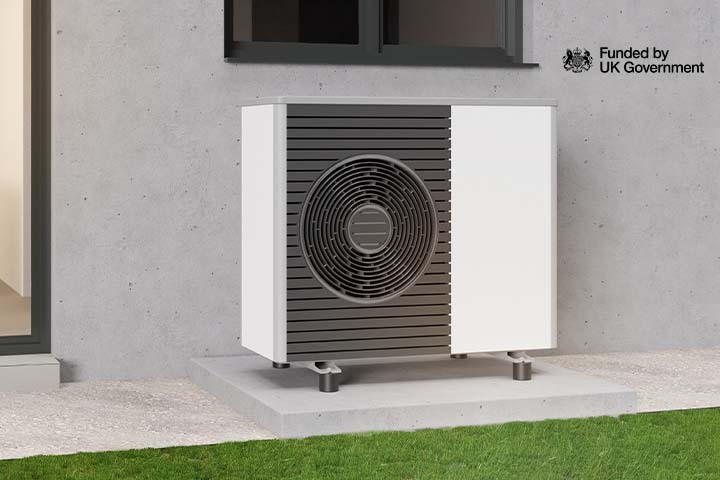
Air-to-air heat pumps extract heat from outside air and distribute it directly into rooms via wall-mounted or ducted indoor units – essentially a sophisticated, reversible air conditioning system.
They heat in winter, cool in summer, and typically cost £5,000–£10,000 installed. That’s meaningfully cheaper than air-to-water systems, which regularly exceed £10,000.
| Feature | Air-to-Water | Air-to-Air |
|---|---|---|
| Heating method | Radiators/underfloor | Fan-blown air |
| Hot water production | Yes | No (standard models) |
| Cooling capability | Limited | Yes |
| Typical install cost | £10,000–£15,000 | £5,000–£10,000 |
| Best suited for | Traditional UK homes | Modern, open-plan, well-insulated |
| Current BUS grant | £7,500 | £0 / £2,500 (2026) |
Air-to-air systems can cut energy bills by 40–60% compared to direct electric heating. They’re less effective than air-to-water in cold snaps, but in a well-insulated, modern home, the performance gap narrows considerably.
Who Should Actually Consider an Air-to-Air System?
Not everyone. Air-to-air suits homes without existing radiator infrastructure, open-plan spaces where air circulation is efficient, or properties needing year-round climate control rather than just heating.
If your home relies on a wet radiator system and you want hot water covered in the same upgrade, air-to-water remains the stronger whole-home solution.
The November 2025 Expansion - What Changes and When
The Department for Energy Security and Net Zero confirmed in November 2025 that BUS will expand to cover both air-to-air heat pumps and heat batteries, each at a £2,500 grant level. This is the first time the scheme has moved to fund air-conditioning-style units.
The target is hard-to-heat homes – properties without radiator space or unsuitable for water-based systems – where air-to-air is often the most practical electrification route.
Expected eligibility conditions for the expanded grant:
- MCS-certified units only
- Space heating function required – cooling-only systems won’t qualify
- No fossil fuel pairing permitted
- One grant per property (stacking with existing BUS grants not permitted)
Official Ofgem pages haven’t caught up yet. Check gov.uk directly for rollout dates rather than relying on installer information, which may lag the announcement.
How to Apply - And What to Do Right Now
The application process itself hasn’t changed for currently eligible systems. For air-to-air, the process will mirror existing Boiler Upgrade Scheme mechanics once the expansion launches.
The steps are straightforward:
- Check your property’s EPC validity at gov.uk – must be within ten years
- Use the government’s heat pump checker tool to confirm suitability
- Get quotes from two or three MCS-certified installers (find them via the MCS directory)
- Your chosen installer submits the BUS application on your behalf
- Confirm consent via the Ofgem email within 14 days – missing this voids the application
- Installation completes; installer claims the grant post-inspection
VAT on heat pump installations remains at 0% until 2027, which is a meaningful secondary saving on top of any grant. For air-to-air specifically, confirm 2026 rollout timing before signing contracts – committing now means paying full price without the grant offset.
Costs, Savings, and What the Numbers Actually Look Like
Running cost comparisons are where most homeowners get misled. The figures circulating – heat pump at £20,600 versus boiler at £22,500 over 20 years – are defensible for larger homes with high heat demand, but they obscure a lot of variability.
| Scenario (Annual) | Gas Boiler | Air Source Heat Pump | Heat Pump Cheaper? |
|---|---|---|---|
| Average UK home (11,500kWh) | £630 | £735 | No (-£105/yr) |
| Optimised (COP 3.5, off-peak tariff) | £835–£1,125 | £940–£1,130 | Neutral to Yes |
| 20-year total (inc. maintenance) | £22,500+ | £20,600–£23,600 | Yes with grant |
The honest picture: heat pumps don’t automatically beat boilers on running costs without optimisation. EPC C or above, a favourable electricity tariff, and a well-sized system are prerequisites for genuine savings.
With the £7,500 BUS grant factored in – or £2,500 for air-to-air from 2026 – the long-term economics improve substantially.
For air-to-air specifically, expect running costs of £800–£1,200 per year. At a £2,500 grant-adjusted install cost, payback sits at five to eight years depending on current heating spend and cooling use. That’s a credible ROI – not a marketing promise.
If BUS doesn’t apply to your situation, ECO4 covers fuel-poor households via energy suppliers with broader eligibility. Green loans at 4–6% APR are available for off-gas properties that don’t qualify for either scheme.
The 2026 expansion is coming. Whether you wait for it or proceed now with an air-to-water system depends entirely on your property, your timeline, and how much the hot water gap matters to your upgrade.
Frequently Asked Questions
No. As of February 2026, air-to-air heat pumps are explicitly excluded from the current BUS eligibility list. A £2,500 grant is expected to launch in 2026 following the November 2025 government announcement – but applications aren’t open yet.
£7,500 for air-to-water heat pumps and ground source heat pumps. Biomass boilers receive £5,000. These figures apply to England and Wales only – Scotland has separate schemes.
No. BUS grants cannot be combined with other government low-carbon heating grants on the same property. ECO4 is a separate scheme with different eligibility criteria, but you can’t claim both for the same installation.
Air-to-water systems heat water for radiators and underfloor heating – and produce domestic hot water. Air-to-air systems blow warm or cool air directly into rooms via indoor fan units. Standard air-to-air models don’t produce hot water, which is why they were originally excluded from BUS.
Not anymore. The minimum insulation requirement was removed in May 2024. That said, poor insulation directly reduces heat pump efficiency and increases running costs – so upgrading before installation still makes financial sense.
Your MCS-certified installer handles the application on your behalf. You’ll receive a consent confirmation email from Ofgem that you must respond to within 14 days. Miss that window, and the application is void.