

Table of Contents
The application procedure for the LA Flex Scheme can be quite confusing, since each council has its own rules, income limits, and required documentation. While LA Flex was put in place to cater to households not in receipt of government benefits, its eligibility criteria often turn out to be more rigid than one would imagine.
A single missing document, the wrong EPC band, or an income figure slightly over the threshold can easily result in rejection. Understanding precisely what local authorities are looking for will prevent delays, wasted time, or missed funding. This guide breaks down the key LA Flex criteria in a clear and simple way that you must know before applying.
What Exactly is LA Flex?
LA Flex (short for Local Authority Flexibility) is an extension of the government’s ECO4 scheme. It provides local councils with the discretion to decide which households in their area need assistance the most, even when they are not in receipt of any government benefits.
Under LA Flex, councils can approve free home energy improvements for households that are:
- On low income
- Living in cold, inefficient homes
- Experiencing health conditions worsened by cold
- At risk of fuel poverty
- Struggling with high energy bills
Funding approval for eligible homes entitles them to fully funded upgrades like:
- Free A-rated condensing boilers
- Full first-time central heating systems
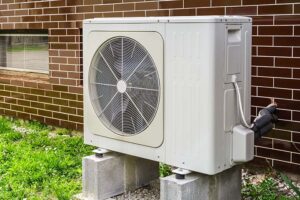
- Air source heat pumps
- Free solar panels (where applicable)
- Loft, cavity wall, internal wall, and underfloor insulation
Its aim is straightforward: lower energy bills and improved comfort, and reduced carbon emissions for vulnerable households.
Air Source Heat Pump Grants
LA Flex Is Not a Benefits-Based Scheme
The most important rule to understand:
LA Flex is not based on benefits at all.
Under the standard ECO4 route, applicants must be on qualifying benefits such as Universal Credit, Pension Credit, or Housing Benefit.
But under LA Flex, councils set their own criteria. This means:
- You do not have to be receiving benefits.
- You do not need to apply for benefits.
Note: You are not required to submit benefit letters.
Instead, the eligibility is based on alternative factors of vulnerability, namely income, health, and performance of properties.
Key LA Flex Criteria: Income & Financial Vulnerability
The first main route under LA Flex is the income-based eligibility route (LA Flex Route 1). Most councils follow the national guidance:
- Total gross household income below £31,000 per year
This is one of the clearest and most straightforward LA Flex criteria. Income means any member in the household with earnings, including:
- Wages
- Pensions
- Self-employment income
- Rental incomes
- Any taxable allowances
The purpose is to assess whether a household is in danger of fuel poverty: the cost of heating a home takes up a large portion of income.
Why income matters
Homes with lower income levels:
- Struggle to upgrade their programs
- Spend more on gas and electricity
- They are more likely to live in older, inefficient properties
- Face higher cold-related health risks
If you are earning over £31,000, then you can still be eligible via the medical route.
Key LA Flex Criteria: Health Conditions & Medical Vulnerability
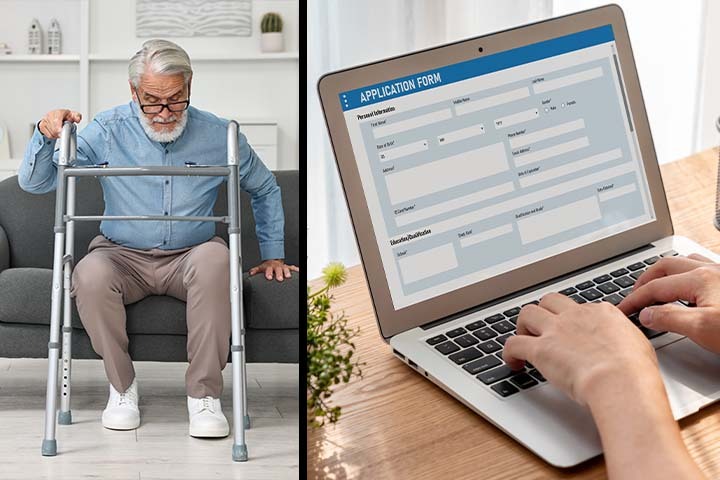
The second main route is the health-based route (LA Flex Route 3), which allows councils to support households where cold homes directly worsen an existing medical condition.
To be eligible, a person in the home must have a qualifying long-term condition from one of the recognised categories:
1. Cardiovascular Health
Includes:
- Heart disease
- History of stroke
- Atrial fibrillation
Cold temperatures put stress on the heart, increasing the risk for severe complications.
2. Respiratory Disease
Includes:
- Asthma
- COPD
- Chronic bronchitis
- Emphysema
Cold, damp homes make symptoms worse and increase hospital admissions.
3. Limited Mobility
Includes:
- Arthritis
- Neuromuscular disorders
- Long-term mobility impairments
People with mobility limitations often cannot generate body heat or move to warmer areas of the home.
4. Immunosuppression or Chronic Conditions
Includes:
- Cancer treatment
- Organ transplant patients
- Autoimmune disorders
- Diabetes – severe cases
Infections are increased, and symptoms worsen with cold and dampness.
5. Medical Referral Requirement
Most councils will require a medical referral or confirmation from:
- A GP
- Hospital consultant
- Healthcare professional
Without it, applications via the medical route are rejected.
This ensures that only genuinely vulnerable households receive support.
EPC Rating Requirements Under LA Flex
Under LA Flex, ECO4 rules still apply to the energy efficiency status of the home. To qualify for fully funded heating upgrades, the property should normally have:
- EPC rating of E or below
- Most councils prioritise E, F, or G properties because they lose more heat and cost more to run.
- Homes with EPC A, B, or C generally do not qualify.
Why EPC matters
Inefficient homes are expensive homes. LA Flex aims to:
- Reduce carbon emissions
- Lower heating bills long-term
- Improve overall energy performance
So the lower your EPC rating, the stronger your eligibility.
Property Type & Heating System Requirements
Councils also take into account the current heating system in your home when determining eligibility. Here’s how property type affects your application:
Gas Properties
If the gas metre in your home was installed before April 2022, you will be eligible for:
- Free A-rated condensing boiler replacement
- Full system upgrade, if your boiler is broken or old
- If you have radiators, you get a new boiler.
- If you don’t have any radiators, you get first time central heating.
Electric-Heated Homes
If you have:
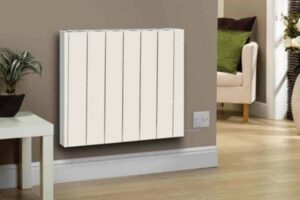
- Panel heaters
- Old storage heaters
- Electric room heaters
- Electric direct-acting systems
You may be eligible for:
- Air source heat pump + solar panels, or
- High heat retention storage heaters + solar panels
Electric homes are expensive to run; therefore, councils prioritise them.
Off-Gas Homes
If your home has no gas connection at all:
- You may qualify for a heat pump system
- Solar PV may also be included.
- Full insulation upgrades are usually approved
No Heating System
First-time central heating grants can be provided for a house with no existing heating system. This may include:
- Boiler
- Radiators
- Pipework
- Thermostats
This is one of the most valuable upgrades available under ECO4 and LA Flex.
Requirement for Local Authority Approval
Even when you meet all the criteria for eligibility, the council has to approve your application. Every local authority has the right to:
- Accept applicants
- Reject applicants
- Suspend applications
- Change local criteria
Your installer cannot approve you on their own. They must be approved by the council’s LA Flex team.
Information You Must Provide
To verify eligibility, you may be asked to provide:
- Proof of income
- Bank statements
- Wage slips
- Council referrers
- Medical referral or notes
- Proof of home ownership
- Landlord consent (for private renters)
Missing documents are one of the top reasons applications get rejected.
Landlord Permission (For Private Tenants)
If you are a private tenant, your landlord must consent to this work. Councils cannot override a landlord’s refusal. Landlords who do not upgrade usually cite:
- Future renovation plans
- Insurance restrictions
- Property access problems
If your landlord does not agree, your LA Flex application cannot proceed.
Overview of Technical Requirements for Survey
Each application has a technical home survey. Even if you qualify on paper, the survey must confirm that:
- The home is safe.
- Electrical systems meet safety standards.
- There is no major structural issue.
- Ventilation meets regulations.
- The upgrade is suitable for the property.
Issues such as unsafe wiring, damp, mould, or roof leaks could delay the application until such work is completed.
Why Understanding the Criteria Matters
LA Flex gives thousands of homes access to:
- Free A-rated boilers
- Free central heating
- Free heat pumps
- Free insulation
- Free solar panels – where applicable
But many applications fail simply because the criteria were misunderstood. Before applying, ensure that you:
- Understand income rules
- Check your EPC
- Check your heating system
- Prepare documentation
- Obtain landlord consent, if necessary
- Get a medical referral if you are applying through the health route.
Doing this raises your possibilities of approval dramatically.
The Bottom Line
The LA Flex scheme has been one of the most valuable routes to accessing a free home energy upgrade for UK households. It opens up opportunities for house owners who cannot qualify through standard ECO4 benefits, and it can be a much-needed lifeline for families in cold, inefficient homes.
By understanding these key criteria – which involve income thresholds, health conditions, EPC requirements, heating system type, council approvals, and documentation – one will be able to make an application that’s strong enough for acceptance.
With eligibility and approval from your local authority, you might be entitled to completely free upgrades.
The more prepared you are, the smoother your application will be.
Frequently Asked Questions
It is still possible for households that do not receive government benefits to qualify if they meet the local authority’s criteria. This includes low-income, health conditions exacerbated by cold homes, or vulnerable residents like young children, elderly people, or disabled occupants.
Most councils use a threshold of about £31,000 annual household income, although each local authority has its own limit, set through its Statement of Intent.
Yes, if you apply on the basis of health conditions. The majority of the councils require some type of referral or confirmation by a GP, healthcare worker, or relevant medical professional showing that your health is affected due to a cold home.
Yes. LA Flex mainly supports homes with EPC E, F, or G, although some councils accept certain D-rated homes depending on their SOI.
Yes – but only with landlord permission. Without written consent, the council will not approve the application.